

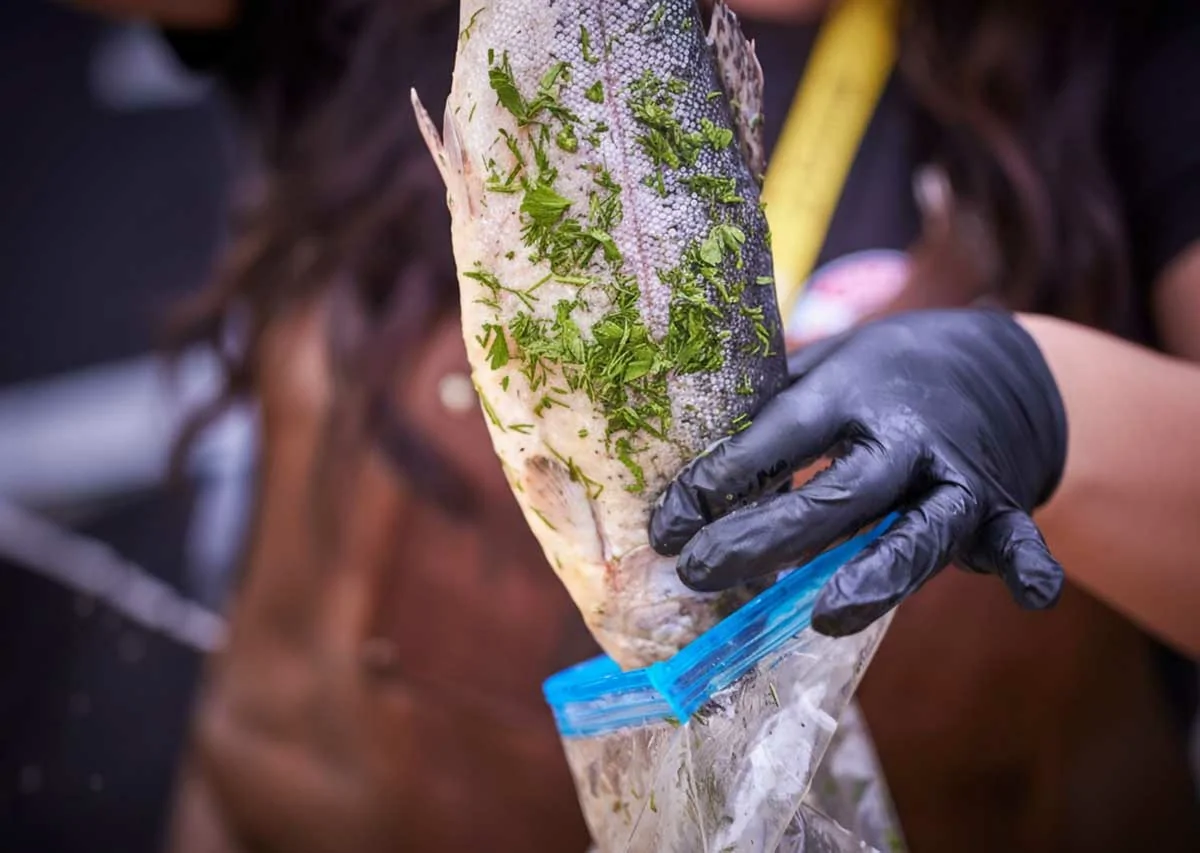
Successful smoking starts before the smoker is switched on. Bacon, pork belly, sausages, salmon and whole fish need to be fresh, chilled, properly cured or salted, and dry on the surface before they meet the smoke. This is what helps the smoke settle evenly and gives a cleaner flavour, better colour and more predictable result.
Quick answer
What should you do before smoking meat or fish?
Start with fresh, well-chilled ingredients. Trim and clean them, cure meat where needed, salt fish carefully, then dry the surface until it feels dry and slightly tacky. Do not smoke meat or fish that is warm, wet on the surface or questionable in freshness.
Key points before you start
- Keep meat and fish chilled until the smoking process begins.
- Cure bacon, pork belly and many sausage-style products according to a reliable recipe.
- Salt salmon, mackerel and whole fish carefully to improve flavour and texture.
- Dry the surface before smoking; wet food takes smoke unevenly.
- Use a food thermometer when internal temperature matters, especially with poultry, minced meat and sausages.
1. Choose fresh meat and fish
For home smoking, ingredient quality matters more than heavy seasoning. Choose meat and fish from a trusted source, keep them cold, and avoid anything with a sour smell, sticky surface, dull colour or signs of drying out.
In the UK, common smoking projects include salmon, bacon, pork belly, ribs, sausages and mackerel. They all need different timings, but they all rely on the same foundation: freshness, hygiene and temperature control.
2. Trim, clean and portion the food
Meat
- Remove loose pieces, sinew and unwanted membrane.
- Trim excess fat where it may block curing or smoke contact.
- Keep pieces similar in thickness for more even results.
- For larger joints, follow a proven curing method rather than guessing.
Fish
- Gut whole fish thoroughly.
- Remove gills if smoking whole fish.
- Rinse briefly in cold water.
- Pat dry before and after salting.
3. Cure meat before smoking
Curing is not just about taste. It helps prepare the structure, seasoning and colour of products such as bacon, pork belly, ham-style joints and some sausages. Use a reliable recipe and measure salt or cure accurately.
| Method | Best for | What to control |
|---|---|---|
| Dry cure | Bacon, pork belly, smaller pieces | Salt amount, even coverage, time, chilling |
| Wet cure or brine | Larger joints and thicker cuts | Brine strength, full contact, fridge temperature |
4. Salt fish before smoking
Fish such as salmon, trout and mackerel usually needs controlled salting rather than a long meat-style cure. Salt firms the flesh, seasons the fish and helps prepare the surface for smoke.
| Fish | Common method | Typical time |
|---|---|---|
| Salmon fillets | Dry salt or short brine | 1–4 hours, depending on thickness |
| Whole trout or mackerel | Brine or dry salting | 4–12 hours, depending on size |
Over-salting fish can make the texture dry and the flavour harsh. After salting, rinse only if your recipe calls for it, then dry the fish properly before smoking.
5. Drying: a step you should not skip
After curing or salting, the product needs to be dried. This is one of the most important stages before smoking, because smoke settles best on a surface that is dry, slightly matt and cool.
A wet surface can cause patchy colour, uneven smoke coverage, a slightly sour taste and shorter shelf life. Drying can be done in a cool, well-ventilated place or inside the smoker with heating and drying switched on, but without smoke.
A good practice is to pat the product with paper towel after removing it from the brine to remove excess surface moisture. This does not replace proper drying, but it helps you reach a dry, even surface before smoking starts.
The product is ready for smoking when:
- it is dry to the touch,
- the surface is slightly matt,
- there are no visible drops of water or brine,
- it has not been left at room temperature for too long.
6. Keep temperature and hygiene under control
Keep raw meat and fish chilled until the smoking process starts. Use clean boards, knives and trays, and keep raw products separate from cooked food. For hot smoking or finishing, measure internal temperature rather than relying only on colour.
| Control point | Why it matters |
|---|---|
| Chilling | Slows bacterial growth before smoking. |
| Clean tools | Reduces cross-contamination. |
| Dry surface | Helps create even colour and cleaner smoke flavour. |
| Internal temperature | Confirms doneness and safety when heat treatment is part of the process. |
7. Why an electric smoker helps
Good preparation is the first part of the process. The second part is control: stable chamber temperature, steady smoke and the ability to separate drying from smoking.
A Borniak electric smoker is useful when you want consistency without constantly managing a fire. The smoke generator feeds wood chips automatically, while the chamber temperature can be controlled more predictably than in a traditional fire-based setup.
Common mistakes
- Putting wet fish or meat straight into the smoker.
- Leaving raw food out of the fridge for too long.
- Guessing cure quantities instead of weighing them.
- Assuming smoke alone makes food safe.
- Using colour as the only sign that food is ready.
FAQ
Do I always need to cure meat before smoking?
Not always. Some hot-smoked foods are seasoned and cooked rather than cured. Bacon, ham-style products and many sausage-style foods usually need a proper curing stage.
Why should fish be dried before smoking?
A dry, slightly tacky surface takes smoke more evenly. Wet fish can develop patchy colour and a less clean smoke flavour.
Is cold smoking enough to make food safe?
No. Cold smoking must be combined with the correct preparation, salt or cure, time, temperature control, hygiene and storage. It should not be treated as a shortcut.
Summary
Prepare meat and fish for smoking by choosing fresh ingredients, keeping them chilled, curing or salting correctly, drying the surface and controlling hygiene. A stable electric smoker then helps keep the process consistent, but it does not replace correct food preparation.