

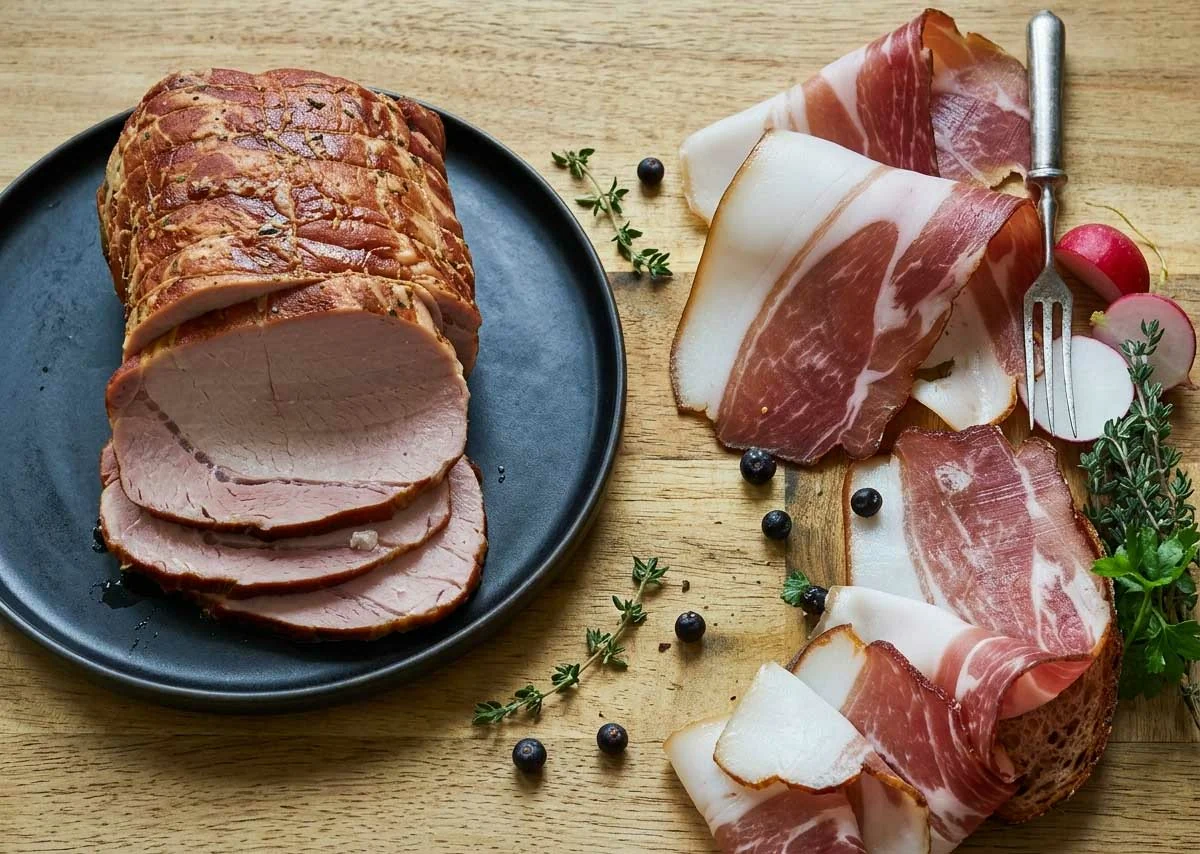
Cold smoking and hot smoking differ mainly in temperature, time and the final texture of the food. Cold smoking gives a stronger smoke aroma and a firmer result, but it needs careful preparation, good hygiene and stable low temperatures. Hot smoking is faster, more beginner-friendly and usually gives food that is ready to eat once the correct internal temperature has been reached.
Quick answer: cold smoking vs hot smoking
Cold smoking is usually carried out at around 16–25°C. The food is exposed to smoke without being fully cooked by heat. This makes preparation especially important: curing, salting, drying and clean handling all matter.
Hot smoking is normally done at around 60–90°C, depending on the food and the smoker instructions. Smoke and heat work together, so the food can be cooked and smoked in the same process. For meat, poultry and fish, the internal temperature should be checked with a probe.
Key points
Cold smoking
Around 16–25°C, longer process, stronger smoke flavour and firmer texture. Often used for salmon, bacon, cheese and some cured products.
Warm smoking
Around 30–60°C, an intermediate stage. The food warms up, but it may still need further cooking or finishing.
Hot smoking
Around 60–90°C or higher depending on the process. Shorter, easier to manage and well suited to salmon, ribs, sausages, pork belly and chicken.
Temperature, time and result
| Method | Typical temperature | Time | Result | Common foods in the UK |
|---|---|---|---|---|
| Cold smoking | approx. 16–25°C | several hours to several days | stronger smoke flavour, firmer texture | salmon, bacon, cheese |
| Warm smoking | approx. 30–60°C | depends on the product | partial warming and flavour development | fish, cheese, cured products before finishing |
| Hot smoking | approx. 60–90°C | usually 1–8 hours | smoked and cooked result with a juicier texture | salmon, ribs, sausages, pork belly, chicken |
What is cold smoking?
Cold smoking is a low-temperature smoking method where smoke, time and preparation do most of the work. The food does not cook in the same way it would in an oven or BBQ. Instead, it gradually takes on smoke aroma, loses some surface moisture and develops a firmer texture.
The process is often done in stages. For example, a product may be smoked for a few hours, rested, then smoked again the next day. This helps control flavour and drying. Cold smoking is popular for salmon, bacon and cheese, but it demands more attention than a quick weekend hot-smoke.
Choose cold smoking when:
- you want a deeper smoke aroma,
- you are preparing bacon, salmon, cheese or cured products,
- you can give the process more time,
- the food has been properly salted, cured or dried,
- you can keep the smoker temperature stable and low.
Warm smoking: the middle ground
Warm smoking sits between cold and hot smoking. The temperature is higher than in cold smoking, but the food may not be fully cooked through. It can help build colour, set the surface and prepare the food for a further stage, such as poaching, baking or finishing to the right internal temperature.
This method is useful when you want more smoke character than a short hot-smoke but still need some warmth in the process. It is common with fish and some cured products.
What is hot smoking?
Hot smoking combines smoke with heat. The chamber temperature is high enough to cook the food gradually while it takes on smoke flavour. The process is shorter than cold smoking and is often easier for beginners because the result is more predictable.
In a UK garden cooking setting, hot smoking works well for salmon fillets, ribs, pork belly, sausages and chicken pieces. The key point is that doneness should not be judged by time alone. Use a probe thermometer to check the centre of the food.
Choose hot smoking when:
- you want food ready the same day,
- you are cooking salmon, ribs, sausages, pork belly or chicken,
- you are new to smoking and want a simpler process,
- you prefer a juicy, tender texture,
- you can monitor the internal temperature.
Internal temperature matters more than clock time
Smoking times are always approximate. Two pieces of pork belly or salmon can cook differently because of thickness, fat content, starting temperature and airflow in the smoker. For foods that need cooking, the internal temperature is the safest guide.
| Food | Indicative minimum internal temperature | Notes |
|---|---|---|
| Poultry | 74°C / 165°F | Applies to whole birds, pieces, minced poultry and stuffing. |
| Minced meat | 71°C / 160°F | Important for sausages and minced meat products. |
| Fish | 63°C / 145°F or opaque flesh | Especially important for thicker pieces. |
| Steaks, chops and roasts | 63°C / 145°F plus rest | Local guidance and preferences may vary. |
Common mistakes
Smoking food while it is too wet
Smoke settles better on a slightly dry surface. If the surface is too wet, the colour and flavour can be uneven.
Using too much smoke
More smoke does not always mean better flavour. Too much smoke can taste bitter or harsh.
Ignoring chamber temperature
Cold smoking needs stable low temperature. Hot smoking needs enough heat to finish the food safely.
Skipping preparation
Curing, salting and drying are part of the process. They should not be treated as optional shortcuts.
Why stable smoke and temperature control help
One of the biggest challenges in smoking is consistency. In a traditional wood-fired setup, you need to manage fire, smoke and temperature at the same time. An electric smoker makes the process easier to understand because temperature control and smoke generation can be managed more separately.
Borniak electric smokers use an automatic smoke generator that feeds wood chips steadily. Wi-Fi models can also help plan stages, monitor the process and repeat successful settings. This does not replace food preparation, hygiene or internal temperature checks, but it can reduce the need to constantly tend a fire.
Checklist before you start
- Choose cold, warm or hot smoking before preparing the food.
- Check whether the food needs curing, salting, drying or finishing.
- Dry the surface before applying smoke.
- Use clean wood chips made for smoking.
- Avoid softwood, painted wood, glued wood or unknown wood.
- Set the chamber temperature for the chosen method.
- For hot smoking, use a probe thermometer.
- Cool and store the food correctly after smoking.
Summary
Cold smoking is best when you want a stronger smoke aroma, a firmer texture and a traditional cured result. It needs more time, more preparation and stable low temperature. Hot smoking is quicker, easier to start with and better suited to everyday garden cooking, but the internal temperature still matters.
If you are new to smoking, start with a simple hot-smoked product such as salmon, pork belly or chicken. Once you understand drying, smoke intensity and temperature control, cold smoking becomes much easier to manage.
FAQ
Is cold smoking safe?
It can be safe only when the food is prepared correctly and the process is controlled. Cold smoking does not fully cook the product, so curing, salting, drying and hygiene are important.
Is hot-smoked food ready to eat?
Usually yes, if it has reached the correct internal temperature. Use a thermometer instead of judging only by colour or time.
What temperature is used for cold smoking?
Cold smoking is usually done at around 16–25°C. Keeping the temperature stable is more important than chasing one exact number.
Which method is better for beginners?
Hot smoking is usually easier for beginners because it is faster and more predictable. Cold smoking requires more preparation and temperature control.
Can I cold smoke bacon?
Yes, but bacon must be properly cured and dried before cold smoking. It is not a shortcut process.
Why should food be dried before smoking?
A slightly dry surface helps smoke settle evenly and improves colour and flavour.
What wood should I use?
Use clean smoking wood chips. Beech and alder are versatile, while apple and cherry give a milder aroma.
Does more smoke mean better flavour?
No. Too much smoke can taste bitter. A stable, balanced smoke flow is usually better.