

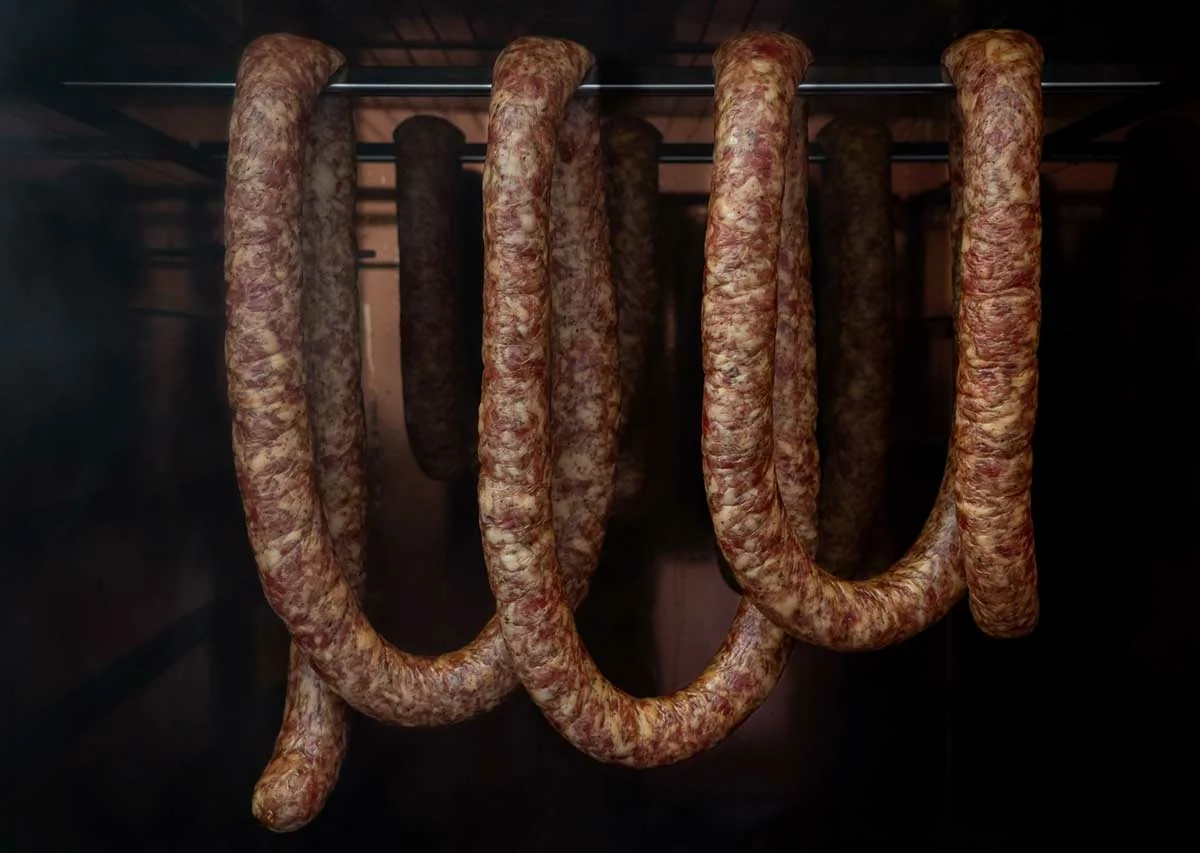
The most common smoking mistakes usually come from rushing the process, not from lacking equipment. Whether you are smoking bacon, pork belly, salmon, sausages or ribs, the same basics matter: dry the surface, keep the temperature stable, use clean smoke and check the internal temperature.
Quick answer
To avoid smoking mistakes, prepare and dry the food before adding smoke, keep the chamber temperature stable, allow used smoke to escape, measure the internal temperature with a probe and cool the finished product safely before storing it.
Key takeaways
- A wet surface absorbs smoke unevenly and can lead to sour aromas or patchy colour.
- Thick, dark smoke is usually a warning sign, not a goal.
- Smoking time is only a guide. Internal temperature decides doneness and safety.
- For cold smoking, heat from the smoke generator can raise the cabinet temperature. A cold smoke adapter helps keep the process cooler.
- Smoking does not replace hygiene, curing, proper cooking temperatures or chilled storage.
Table: smoking mistakes, symptoms and fixes
| Mistake | Symptoms | How to avoid it |
|---|---|---|
| Temperature too high | Dry texture, split fish skin, heavy fat loss, bitter flavour. | Increase temperature gradually and use a probe thermometer. |
| No drying stage | Patchy colour, sour smell, poor smoke adhesion. | Dry the surface until it is matte and no longer wet. |
| Dirty or heavy smoke | Bitterness, soot, dark coating, harsh aroma. | Use clean smoking chips and keep the vent working. |
| Poor curing | Uneven salt level, grey colour, poor keeping quality. | Use tested salt or curing salt ratios and do not shorten the process. |
| No internal temperature check | Food looks done outside but is undercooked or dry inside. | Measure the thickest part with a food probe. |
| Poor storage | Mould, sour smell, drying out or shorter shelf life. | Cool safely, refrigerate and vacuum-pack if needed. |
1. Running the smoker too hot
Too much heat is one of the main reasons smoked bacon, salmon, sausages and pork belly turn out dry. High temperature sets proteins too quickly, pushes out fat and can make the surface tighten before smoke has worked evenly.
In an electric smoker, remember that the smoke generator can add heat even when the main heater is not running. This matters during cold smoking. For bacon, salmon or cheese, a cold smoke adapter moves the smoke path away from the cabinet and helps reduce the temperature entering the smoker.
How to avoid it
- Work in stages: drying, smoking, cooking or finishing.
- Raise temperature slowly, especially for fish and sausages.
- Measure internal temperature, not only cabinet temperature.
- Use a cold smoke adapter for low-temperature smoking.
2. Skipping the drying stage
Drying is not optional. Smoke sticks best to a dry, slightly tacky surface. If meat, fish or cheese goes into the smoker wet, smoke mixes with surface moisture and the result can be patchy, sharp or sour.
Correct result
The surface is dry, matte and slightly tacky. There are no visible drops of water.
Common mistake
Food goes into smoke straight from brine, the fridge or after rinsing.
Use gentle heat and airflow without smoke first. Start the smoke generator only when the surface is ready.
3. Using too much smoke
Good smoke does not need to be thick. It should be light, clean and steady. Dense smoke, soot or an acrid smell usually means poor combustion or poor airflow.
Do not keep the chimney or vent fully closed throughout the process. Smoking needs air exchange: fresh smoke enters the cabinet and used smoke leaves it. Without this, flavour can become bitter and the colour too dark.
How to keep smoke cleaner
- Use smoking chips made for food smoking.
- Avoid softwood, painted wood, glued wood, treated wood or wood of unknown origin.
- Do not overload the cabinet.
- Leave space between pieces so smoke can circulate.
- Clean areas where fat and tar-like deposits build up.
4. Poor curing or salting
Curing affects flavour, colour, texture and safety. If the cure is too short, salt may not distribute evenly. If it is too long or wrongly calculated, the product may become too salty or dry.
Keep meat chilled during curing, use reliable ratios and write down your process. That is the easiest way to make a successful batch repeatable.
5. Relying only on time
Time is only a guide. Thickness, fat content, starting temperature and position in the cabinet all change the result. Salmon fillets, pork belly and sausages will not finish in the same way.
Use a food probe and measure the thickest part of the product, away from bone and large pockets of fat. This is especially important for poultry, sausages, ham, pork belly and fish.
| Product | Guidance | Note |
|---|---|---|
| Poultry | 74°C | Applies to whole birds, portions and stuffing. |
| Ham, pork loin, pork belly and sausages | 70°C | Measure in the centre of the thickest part. |
| Fish | 63°C | Especially important for thick pieces and whole fish. |
These values are educational guidance. For food safety, follow the appliance manual, UK food safety advice and reliable official sources.
6. Cooling and storing the product incorrectly
After smoking, food should not sit warm and damp for too long. At the same time, an abrupt temperature shock can create condensation on the surface and affect texture.
Let the product settle in clean conditions, then cool it safely and store it in the fridge. For longer storage, vacuum packing can help. Smoking improves flavour and may support keeping quality in some products, but it does not replace refrigeration.
How a stable electric smoker helps
A Borniak electric smoker is useful when you want to reduce variables: stable cabinet temperature, separate smoke generation and a repeatable process without constantly managing a fire. It does not remove the need for good preparation, hygiene and internal temperature checks, but it makes the process easier to control.
WiFi models allow ready-made programmes or custom stages. This is useful for drying, smoking and final cooking stages, especially when you want to repeat the same result next weekend.
Checklist before you start
- The food is fresh and has been kept chilled.
- Curing or salting follows a reliable recipe.
- The surface is dry and matte before smoke is added.
- The cabinet is not overloaded.
- Smoke can circulate and leave the cabinet.
- A probe thermometer is ready.
- You know how the food will be cooled and stored afterwards.
FAQ
Why does my smoked food taste bitter?
The most common causes are heavy smoke, poor airflow, a wet surface or too high a temperature. Smoke should be light, clean and steady.
Can I smoke food without drying it first?
It is not recommended. A wet surface absorbs smoke unevenly and can create patchy colour or sour aromas.
Is smoking time enough to know when food is done?
No. Time is only a guide. Internal temperature and the type of product are more important.
Why does my cabinet temperature rise during cold smoking?
The smoke generator produces some heat. A cold smoke adapter helps cool the smoke before it reaches the cabinet.
Does more smoke mean more flavour?
Not always. Too much smoke can create bitterness and soot. Clean, steady smoke gives better results.
Does smoking preserve food on its own?
No. Safety and keeping quality also depend on salt, temperature, hygiene, water content and refrigerated storage.
What wood should I avoid for smoking?
Avoid softwood, painted wood, glued wood, treated wood and wood of unknown origin. Use smoking chips intended for food.
What should I change if the food is too dry?
Next time, reduce the temperature, shorten the final cooking stage, raise heat more slowly and use a probe thermometer.
Summary
The most common smoking mistakes are rushing, overheating, skipping the drying stage, using heavy smoke, curing poorly and failing to measure internal temperature. A staged, controlled process makes home smoking safer, cleaner and more repeatable.