
Smoking food at home does not have to mean managing a fire for hours or guessing when the food is ready. With good preparation, a dry surface, clean wood smoke and steady temperature control, beginners can smoke pork loin, bacon, sausages, salmon, trout, cheese and other foods with much more confidence. This guide explains the full process step by step, from choosing the product to curing, drying, smoking, finishing and storage.
Key takeaways
Smoking food at home in brief
- Start with a fresh, good-quality product such as pork loin, pork belly, sausages, trout, salmon or cheese.
- Meat for smoked charcuterie usually needs curing or salting before smoking.
- The surface must be dry before smoke is applied, otherwise the colour and flavour may be uneven.
- The right chamber temperature depends on the method: cold smoking, warm smoking or hot smoking.
- For meat, poultry and fish, check the internal temperature with a probe thermometer.
- More smoke does not always mean better flavour. Too much smoke can make food bitter.
What is food smoking?
Smoking is a cooking and flavouring method that uses smoke from suitable wood. The smoke gives food its characteristic aroma, colour and taste. Depending on the product, smoking may be a flavouring stage only, or part of a longer process that also includes curing, drying, heat treatment and cooling.
In the UK, popular foods for home smoking include bacon, pork belly, sausages, salmon, trout, chicken wings and cheese. For a first attempt, choose something predictable, such as pork loin, pork belly, trout or a firm cheese. These products make it easier to understand how smoke, temperature and drying affect the final result.
The smoking process step by step
The process can be divided into six basic stages. Not every food needs exactly the same treatment, but this structure helps beginners understand the order of work.
| Stage | Why it matters | Beginner tip |
|---|---|---|
| Choose the product | Fresh food is easier to prepare and safer to handle. | Avoid meat or fish with an uncertain smell, source or use-by date. |
| Cure or salt | Improves flavour, colour, texture and keeping quality. | Do not shorten curing times unless you understand the process. |
| Dry the surface | A dry surface takes smoke and colour more evenly. | The product should feel dry or slightly tacky, not wet. |
| Smoke | Smoke adds flavour, aroma and colour. | Use clean smoking chips and avoid heavy, stale smoke. |
| Finish cooking if needed | Brings the centre of the product to the right temperature. | Use a probe thermometer rather than judging by colour alone. |
| Cool and store | Helps preserve quality and reduce food safety risks. | Cool and store smoked food hygienically. |
Step 1: choose the right food to smoke
For your first smoking session, choose a food that is simple and predictable. Pork loin, pork belly, sausages, trout, salmon and firm cheese are good starting points. They help you learn the effect of smoke level, chamber temperature and drying without making the process too complicated.
Trim meat neatly and remove loose pieces. Clean and dry fish carefully. Choose firm cheese rather than very soft cheese, because soft cheese may deform if the temperature rises too much.
Good beginner choices
- pork loin,
- pork belly or bacon,
- trout,
- salmon,
- sausages,
- firm cheese.
Better for later
- large hams,
- poultry without temperature control,
- long cold-smoking projects,
- products from an uncertain source.
Step 2: cure or salt meat before smoking
Curing is one of the most important stages when making smoked meat or bacon. Salt or curing salt moves into the meat and affects flavour, colour, texture and keeping quality. It also has food safety importance, so curing should not be rushed simply to start smoking earlier.
Dry curing
In dry curing, meat is rubbed with salt, curing salt and spices, then kept chilled for a defined time. This works well for pork belly, bacon-style projects, ham and products where a more concentrated flavour is desired.
Wet curing or brining
In wet curing, the meat is submerged in water with salt or curing salt and spices. The brine should cover the product fully. This method is often easier for beginners because it supports more even seasoning.
Step 3: dry the food before smoking
After curing or salting, the food must be dried. This is a common beginner mistake. A wet surface does not take smoke well and can lead to uneven colour, a sour note or a weaker smoke flavour.
Air drying
Place the product in a cool, dry and well-ventilated area so air can reach all sides. The surface should become dry or slightly tacky before smoking.
Drying in an electric smoker
In an electric smoker, you can use gentle heat and airflow without smoke. This makes the drying stage easier to control, especially in damp weather.
Step 4: choose the smoking temperature
The right temperature depends on the food and method. Cold smoking salmon or cheese is very different from hot smoking pork belly, sausages or pork loin. Beginners often find warm or hot smoking easier because the process is shorter and easier to monitor.
| Method | Typical chamber temperature | Best used for |
|---|---|---|
| Cold smoking | about 16-25°C | Selected products such as salmon, bacon or cheese, with careful preparation and hygiene. |
| Warm smoking | about 30-60°C | Fish, cheese and delicate products where gentle heat is needed. |
| Hot smoking | about 60-120°C | Meat, sausages and foods that also need heat treatment. |
Stable temperature matters because too little heat can make the process unnecessarily long, while too much heat can dry the food, melt fat too quickly or damage texture. An electric smoker helps by keeping the chamber temperature steadier than a fire-based setup.
Step 5: check internal temperature
Colour, smell and time are not enough to judge whether meat, poultry or fish is ready. A probe thermometer placed in the thickest part of the product is the most reliable tool, especially for poultry, minced meat, sausages and larger cuts.
| Food | Indicative minimum internal temperature | Note |
|---|---|---|
| Poultry | 74°C | Applies to whole birds, individual cuts and stuffing. |
| Ham, pork loin, pork belly and sausages | 70°C | Measure the temperature at the centre of the thickest part. |
| Fish | 63°C | Particularly important for thick cuts. |
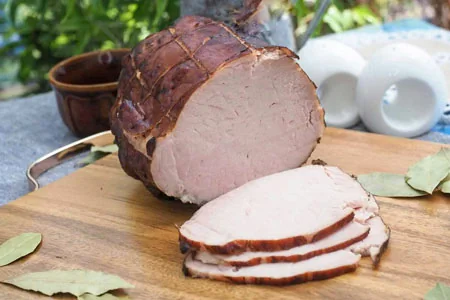
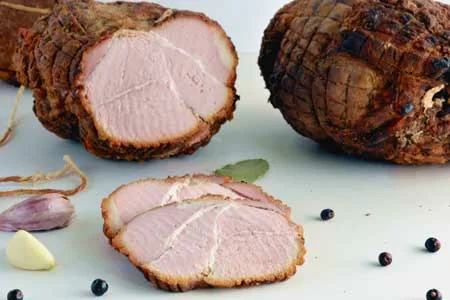
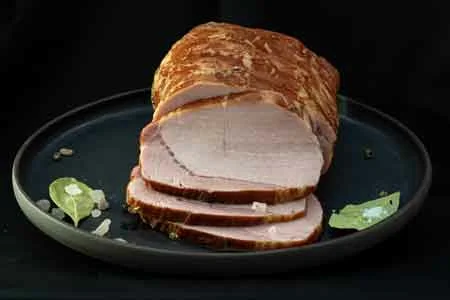
Example: easy smoked pork loin for beginners
Pork loin is a useful first project because it is easy to prepare and the result is simple to evaluate by colour, aroma, juiciness and internal temperature. Treat this example as a learning process rather than a universal rule for every cut of meat.
Ingredients
- 1 kg pork loin,
- 1 litre cold water,
- about 100 g salt,
- ground black pepper,
- clean smoking chips, for example beech or alder.
Preparation
- Trim the pork loin and remove loose pieces.
- Rub the surface with pepper.
- Dissolve the salt in cold water.
- Submerge the meat fully in the brine.
- Keep it chilled for about 8-9 hours.
- Turn the meat halfway through the curing time.
- Remove, pat dry and tie with butcher’s string if needed.
Drying and smoking
- Place the pork loin in the smoker and insert the probe into the thickest part.
- Dry without smoke at around 50°C until the surface feels dry.
- Turn on the smoke generator and set the chamber to around 55°C.
- Smoke for about 4 hours or until the colour is right.
- Raise the chamber temperature and bring the centre to about 64°C.
- Turn off heat and smoke, then cool the product hygienically.
Which wood chips should you choose?
For a first attempt, beech and alder are reliable choices. They give a balanced smoke flavour and work well with pork, sausages and fish. Apple and cherry are milder and slightly fruity, while oak gives a stronger character.
Use only clean wood chips intended for food smoking. Do not use softwood, painted wood, glued wood, treated wood or wood of unknown origin.
Why an electric smoker helps beginners
Traditional smoking can be rewarding, but it requires experience in managing fire, airflow and temperature. An electric smoker simplifies the process because temperature control and smoke generation are easier to manage separately.
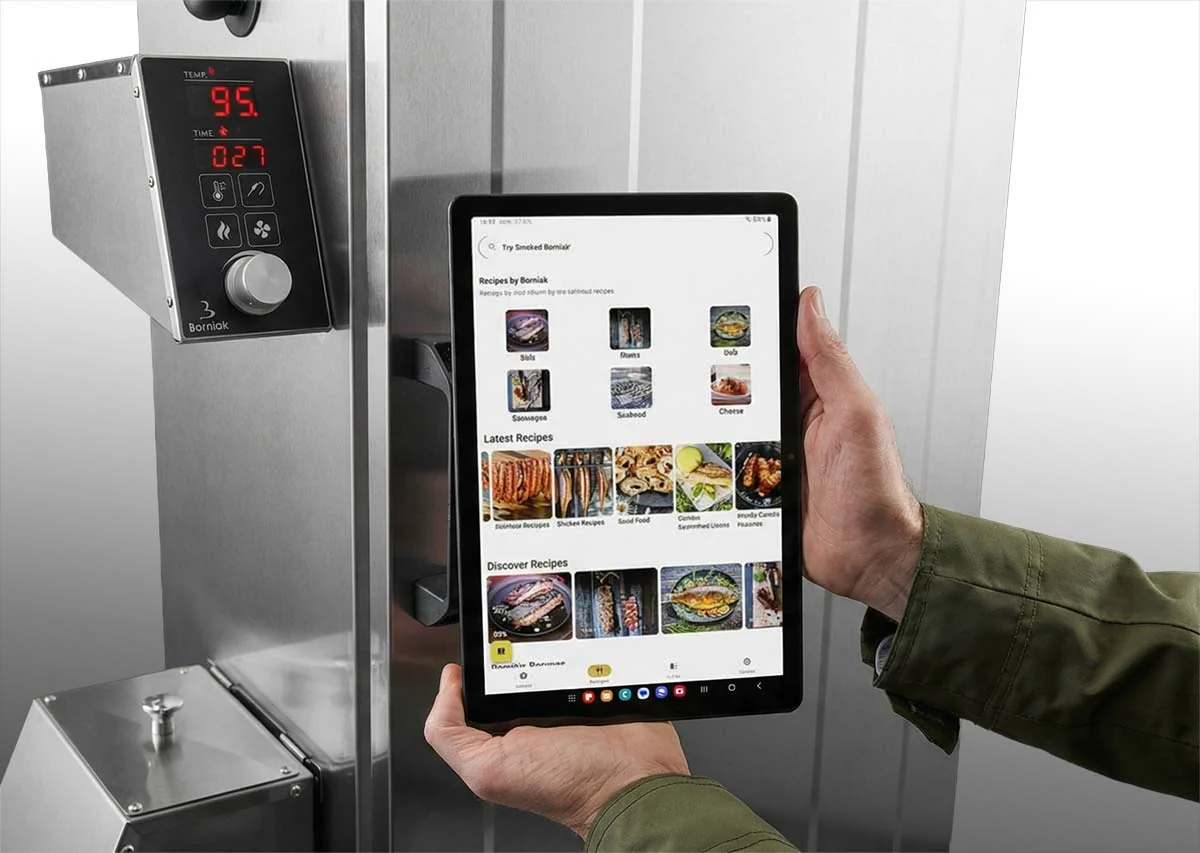
Borniak electric smokers are useful when consistency matters: bacon, pork loin, sausages, fish, cheese and longer smoking sessions. The automatic smoke generator feeds wood chips without constant refilling, and Wi-Fi models with the Borcook app can help run prepared smoking programmes.
Common smoking mistakes
| Mistake | Result | How to avoid it |
|---|---|---|
| Curing too briefly | Uneven flavour, weak colour and reduced quality. | Follow a tested process for the product. |
| Smoking wet food | Uneven colour, sour notes and poor smoke adhesion. | Dry the surface before applying smoke. |
| Using too much heat | Dry texture, melted fat and tougher meat. | Control the chamber temperature and avoid rushing. |
| Using too much smoke | Bitter, heavy flavour. | Use clean smoke and remember that more is not always better. |
| No internal temperature check | Risk of undercooking or overcooking. | Use a probe thermometer in the thickest part. |
FAQ
Is smoking food at home difficult?
No, if you follow the process carefully. Preparation, curing or salting, drying, temperature control, clean smoke and internal temperature checks are the most important parts.
What should I smoke first as a beginner?
Pork loin, pork belly, sausages, trout, salmon and firm cheese are good beginner choices because they make the process easy to observe.
Do I need to cure meat before smoking?
For many smoked meats and bacon-style products, yes. Curing affects flavour, colour, texture, keeping quality and safety.
Can I smoke wet meat?
It is not recommended. Wet surfaces take smoke poorly and can lead to uneven colour and flavour.
Is an electric smoker good for beginners?
Yes. An electric smoker makes temperature control easier and reduces the need to manage a live fire throughout the process.
Summary
Good smoking starts before the smoke is switched on. Choose a fresh product, prepare it correctly, cure or salt it when needed, dry the surface and then control smoke, chamber temperature and internal temperature. An electric smoker with an automatic smoke generator makes the process easier and more repeatable, but good hygiene, careful preparation and temperature checks still matter.