



Cold Smoking vs Hot Smoking
Cold Smoking vs Hot Smoking
Mar 3, 2026
By
Borniak
Cold Smoking vs Hot Smoking – Key Differences and Practical Applications
Smoking is a controlled food processing method where smoke and temperature act simultaneously on the product. The selected temperature range determines the structural changes within the food, influencing texture, shelf life, flavour profile and overall process duration. In practice, two primary methods are used: cold smoking and hot smoking, with warm smoking acting as an intermediate stage.
Cold Smoking
Temperature range: 16–25°C
Duration: several hours to several days
Result: intense smoke flavour, improved preservation
At these temperatures, the product is not fully cooked. The dominant factor is the chemical action of smoke components. Compounds produced during wood smouldering are responsible for the distinctive flavour, antioxidant effect and partial preservation.
Cold smoking is often carried out in cycles (for example, a few hours per day), allowing gradual drying and stabilisation. Maintaining stable temperature conditions and ensuring the product is properly dried before starting are critical factors.
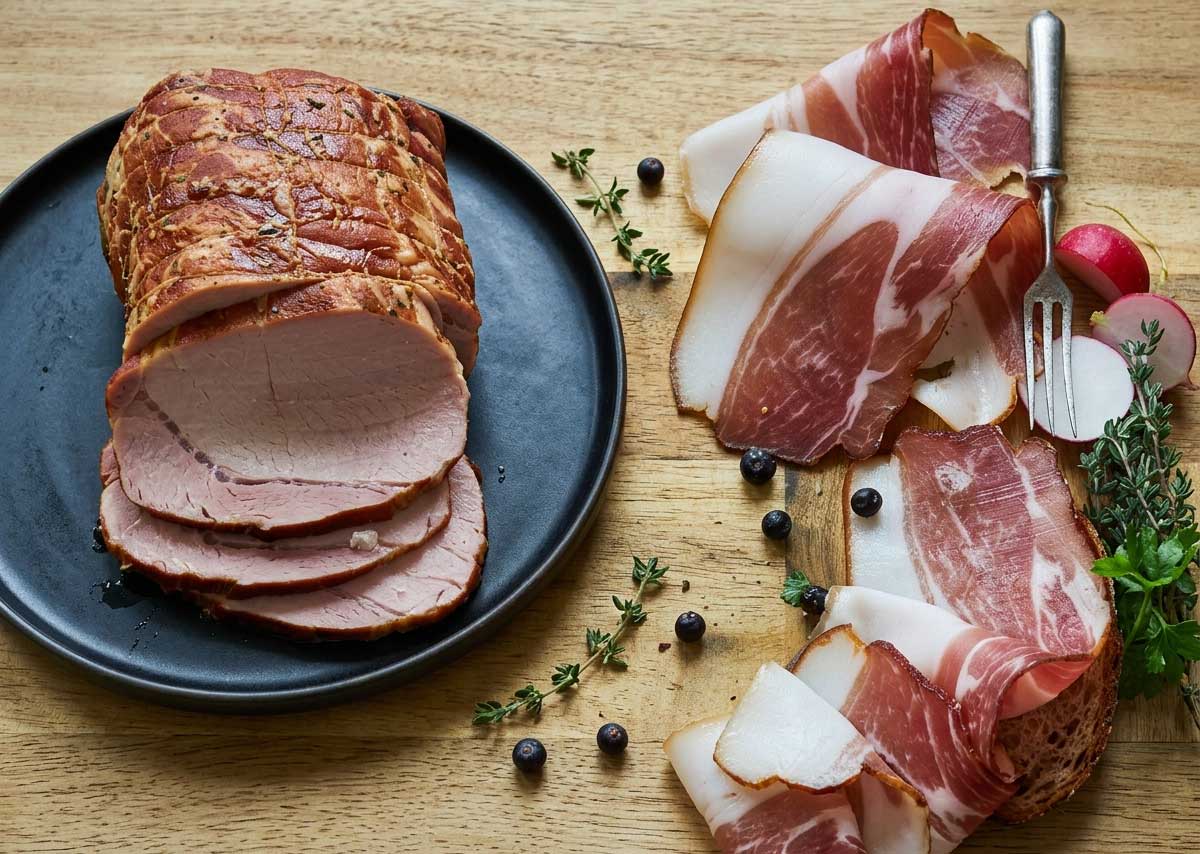
Cold smoking is commonly used for dry-cured sausages, traditional continental charcuterie, smoked salmon and cheeses — products where depth of smoke flavour and extended keeping quality are desirable.
Key characteristics:
- no full heat treatment
- careful pre-drying is essential
- firmer, denser texture
- highly sensitive to temperature fluctuations
- long, multi-stage process
Warm Smoking – The Transitional Stage
Temperature range: 30–60°C
Purpose: preparation for further cooking
Within this range, partial heat treatment begins. The surface stabilises, but the product is not yet fully cooked.
In practical terms, warm smoking is often used as a preparatory stage before poaching or finishing, helping improve protein binding and reducing moisture loss during final cooking.
Hot Smoking
Temperature range: 60–90°C
Duration: typically 1–8 hours
Result: ready-to-eat product with tender, juicy texture
Unlike cold smoking, hot smoking combines smoke exposure with active cooking. The chamber temperature gradually raises the internal temperature of the meat to a safe level, meaning the product is ready to eat once the process is complete.
Key characteristics:
- significantly shorter process time
- simultaneous smoke and heat application
- softer, juicier texture
- less sensitive to minor temperature variations
Hot smoking is versatile and time-efficient. It is commonly chosen for pork loin, belly, collar, poultry and fish, and is particularly popular among those beginning their smoking journey.
Precision Control – The Importance of Automation
One of the greatest challenges in smoking — particularly cold smoking — is maintaining stable conditions over many hours or even days. Even minor temperature shifts or excessive smoke intensity can negatively affect the final result.
Borniak smokers equipped with WiFi allow users to programme complete multi-day smoking cycles via the Borcook app.
Users can:
- select ready-made programmes
- create custom multi-stage schedules
- set precise chamber temperatures (e.g. 20°C for cold smoking)
- programme smoke generator cycles (smoke – pause – smoke)
- define total process duration
The smoker automatically executes the defined schedule — from drying, through smoking, to final cooking until the target core temperature is reached.
During operation, the smoker:
- maintains stable chamber temperature
- controls the smoke generator cyclically
- manages each programmed stage
- monitors the process until defined parameters are achieved
As a result, multi-stage cold smoking — traditionally requiring constant supervision — becomes stable, repeatable and predictable.
Summary
Cold smoking and hot smoking are two distinct techniques delivering different results.
Cold smoking produces a firm texture, intense smoke character and extended shelf life.
Hot smoking offers a faster process and results in a tender, juicy, ready-to-eat product