



Poaching vs Oven Finishing
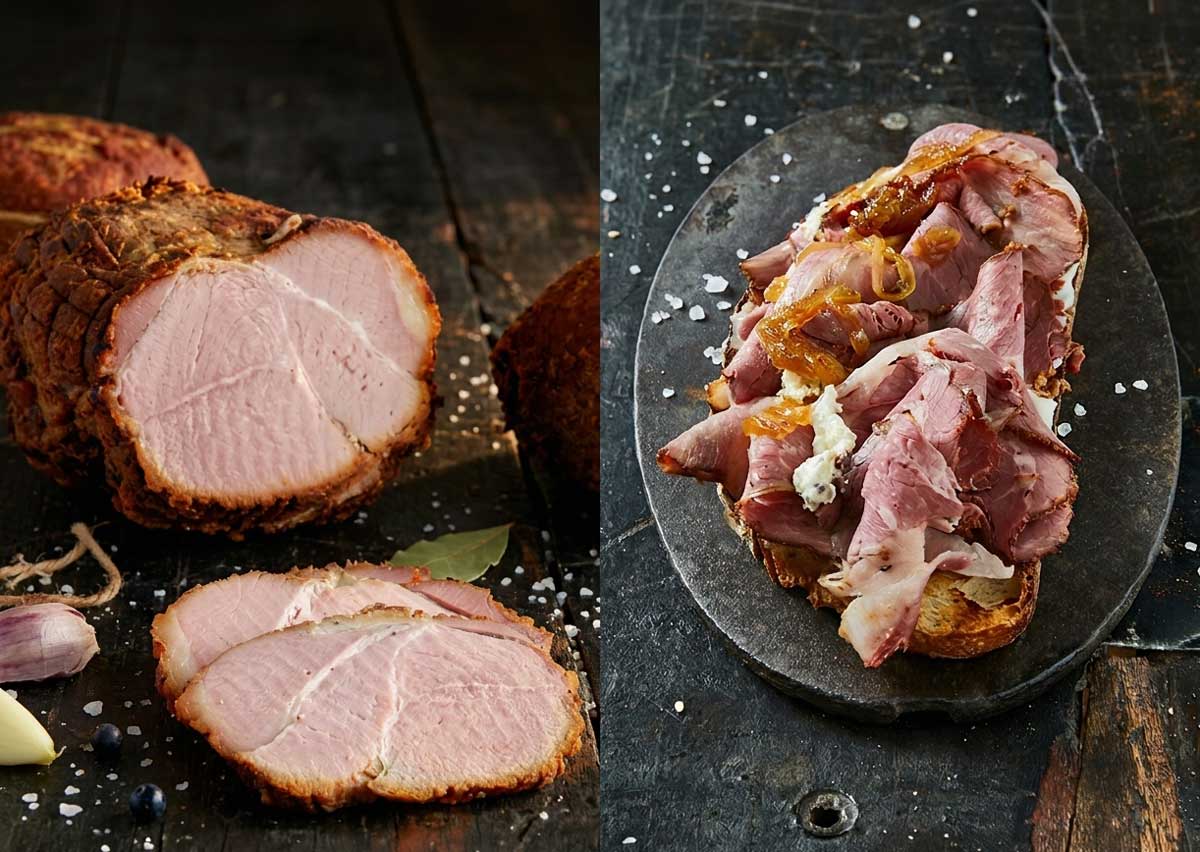
Poaching vs Oven Finishing
Mar 3, 2026
By
Borniak
Poaching vs Oven Finishing – Differences and Practical Significance
After smoking, meat products often require additional heat treatment. The objective is to reach a safe internal temperature, stabilise protein structure and ensure full microbiological safety.
In practice, two primary methods are used: poaching and oven finishing (dry heat finishing). Although both achieve the required internal temperature, they differ in heat transfer mechanism, process dynamics and their effect on final texture and juiciness. Understanding these differences allows for a deliberate choice depending on the product type and desired outcome.
Poaching
Heating medium: water or steam
Temperature range: typically 75–85°C
Main effect: high juiciness and delicate texture
Poaching involves heating the product in water or steam. Due to the high thermal conductivity of the medium, heat is transferred evenly and gently throughout the product. This ensures a stable process with minimal risk of local overheating. The result is a moist, tender and uniform texture. Surface browning does not occur — the purpose is purely thermal stabilisation and achieving a safe core temperature. Poaching is widely used for sausages, cooked hams, poultry products and other items where moisture retention and softness are key quality parameters.
Oven Finishing (Dry Heat)
Heating medium: hot, dry air
Chamber temperature: typically 80–120°C
Main effect: firmer structure and lightly browned exterior
Oven finishing takes place in dry hot air. As the internal temperature gradually rises, the outer layer partially dries. This produces a firmer structure and a characteristic lightly roasted surface. The method enhances shape stability and is often applied to pork belly, collar, loin or larger BBQ-style cuts. Compared to poaching, the result is less juicy but more structurally defined and texturally pronounced.
Choosing the Right Method
The selection should reflect the intended technological outcome:
• Maximum juiciness and tenderness → Poaching
• Firmer consistency and lightly roasted surface → Oven finishing
• For larger cuts, oven finishing often serves as a natural continuation of hot smoking
The chosen method influences not only temperature but also the final texture and overall character of the product.
Process Stability – The Importance of Temperature Control
Regardless of method, the following are critical:
• precise temperature control
• monitoring of internal core temperature
• stable environmental conditions throughout the stage
In modern electric smokers, oven finishing can be programmed as an automatic stage within a smoking cycle, continuing until the target internal temperature is reached.
In Borniak units equipped with WiFi and the Borcook app, users can:
• set chamber temperature
• define stage duration
• specify target internal temperature
• supervise the process without manual adjustments
The system maintains stable parameters automatically, ensuring consistent, repeatable results while minimising risk of error.
Summary
Poaching and oven finishing both achieve the same objective — a safe internal temperature. However, they differ significantly in heat transfer method and their impact on structure and juiciness of the final product.