



How to Prepare and Cure Meat and Fish Before Smoking
How to Prepare and Cure Meat and Fish Before Smoking
Mar 17, 2026
By
Borniak
How to Prepare and Cure Meat and Fish Before Smoking
Successful smoking begins long before the smoke generator is switched on. The final quality of the product — including microbiological safety, shelf life, smoke absorption, flavour and texture — depends primarily on proper raw material preparation.
Even perfect temperature control and clean smoke cannot compensate for mistakes made during selection, curing or drying.
Below is a complete, technically sound workflow.
1. Selecting the Raw Material – The Foundation of Quality
Meat and fish for smoking should:
• come from a trusted source
• be fresh and properly chilled
• show no signs of spoilage or unpleasant odour
Meat should ideally be processed within 24–48 hours of purchase.
Fish require maximum freshness and storage at 0–4°C.
After purchase, products should be refrigerated as soon as possible (2–6°C). Any prolonged exposure to higher temperatures promotes microbial growth and reduces safety.
2. Initial Preparation – Ensuring Even Smoking
Proper preparation ensures consistency and appearance.
Meat:
• remove membranes and excess fat
• remove bone fragments
• shape evenly
• optionally pierce larger cuts to improve brine penetration
Fish:
• gut thoroughly
• remove gills
• rinse in cold water
• dry thoroughly
Hygiene at this stage is critical for overall food safety.
3. Curing Meat – Safety and Colour Stability
Curing is a key stage with three main functions:
1. Achieving proper salt levels
2. Stabilising colour
3. Limiting microbial growth
Methods:
• dry curing (salt or curing salt)
• wet curing (brine)
Typical times:
• small cuts: 8–24 hours
• larger cuts: 2–5 days (4–6°C)
Cold storage throughout is essential.
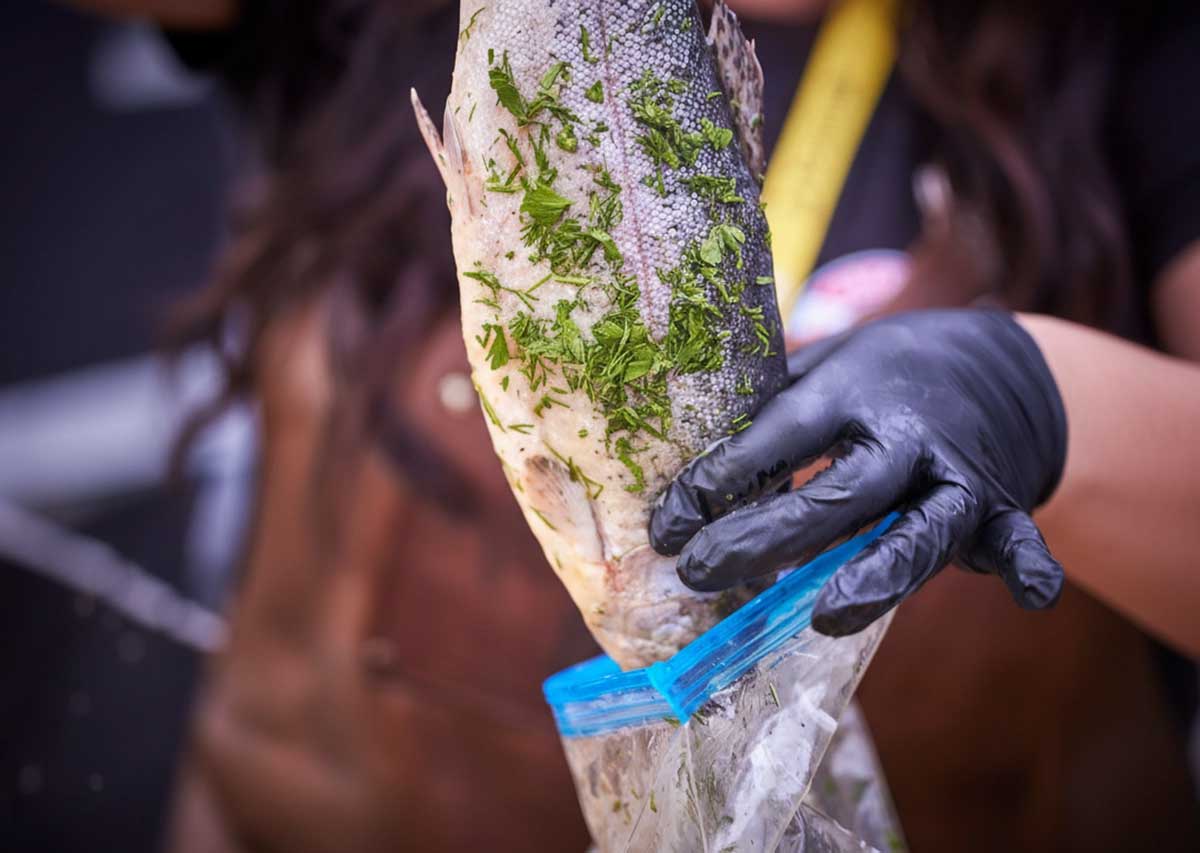
4. Salting Fish – Structure and Flavour Control
Fish are typically salted rather than cured.
Methods:
• dry salting (2–3% of weight)
• short brining (4–8%)
Time:
• fillets: 1–4 hours
• whole fish: 4–12 hours
Over-salting can negatively affect texture.
5. Drying – Essential for Proper Smoke Absorption
After curing or salting, the product must be thoroughly dried.
A wet surface:
• prevents even smoke adhesion
• causes uneven colour
• reduces flavour quality
The product should be:
• dry to the touch
• slightly matte
• free from visible moisture
Drying methods:
• cool, ventilated space (several hours)
• smoker chamber without smoke
6. Storage Before Smoking
If smoking does not start immediately:
• store at 2–6°C
• avoid airtight sealing without airflow
• do not leave at room temperature
Process Stability – The Second Pillar of Success
Preparation is only half of the process. The second is controlled smoking:
• stable chamber temperature
• internal temperature monitoring
• clean, consistent smoke
Borniak smokers allow full process programming — from drying to smoking.
With WiFi and Borcook app, users can:
• use ready-made programs
• define custom parameters
• maintain stable temperature automatically
• control smoke generator cycles
This transforms smoking into a repeatable and controlled process.
Summary
Proper preparation includes:
1. Fresh, properly chilled raw material
2. Careful initial processing
3. Curing meat or salting fish
4. Thorough drying
5. Hygiene and temperature control